

Finding the Human Story
A complete brand overhaul for a B2B SaaS company and the moment that changed how we thought about everything.
The Challenge
MindForge had a product worth believing in. A platform designed to connect and train frontline workers; the people who build things, fix things, and keep the world running. But the brand didn't reflect that. The website was generic. The messaging was feature-heavy and forgettable. The visuals looked like every other SaaS company trying to sound important.
In a crowded market full of enterprise software brands saying the same things in the same ways, MindForge needed to stop sounding like a product and start sounding like a purpose.

My Role
My path into this work wasn't linear. I'd spent years leading the company's e-learning creative team before that division got restructured. Rather than accept a reduced role, I made the case to leadership that my knowledge of the product, the customers, and the company voice made me the right person to help shape how MindForge presented itself externally.
The CEO gave me the opportunity. The structure was unconventional: an outside marketing firm handled planning and strategy, an outside design house handled development and visual execution, and I sat in the middle. My role became the connective tissue between all of it. I was charged with keeping projects on-brief, protecting the brand voice the c-suite wanted (but struggled to communicate to outside vendors), and advocating for creative decisions I believed would better serve our audience.
I didn't have a team reporting to me. What I had was influence, relationships, and a persistent belief that the work could be better. I used all three.
The Approach
We started where most brand refreshes start: with the product. What does it do? What problems does it solve? How is it different? Those are the right questions, but they lead to the wrong answers if you stop there. Feature-led messaging tells people what a product is. It rarely tells them why they should care.
The shift happened during a product launch for a new auto-translation feature. The original brief was straightforward enough: write a blog post and email campaign explaining what the feature does and how it works. Clean and functional! But forgettable…
Before we started writing, I did something that wasn't in the brief. I talked to our customer success team.
What I learned drilled into my brain.
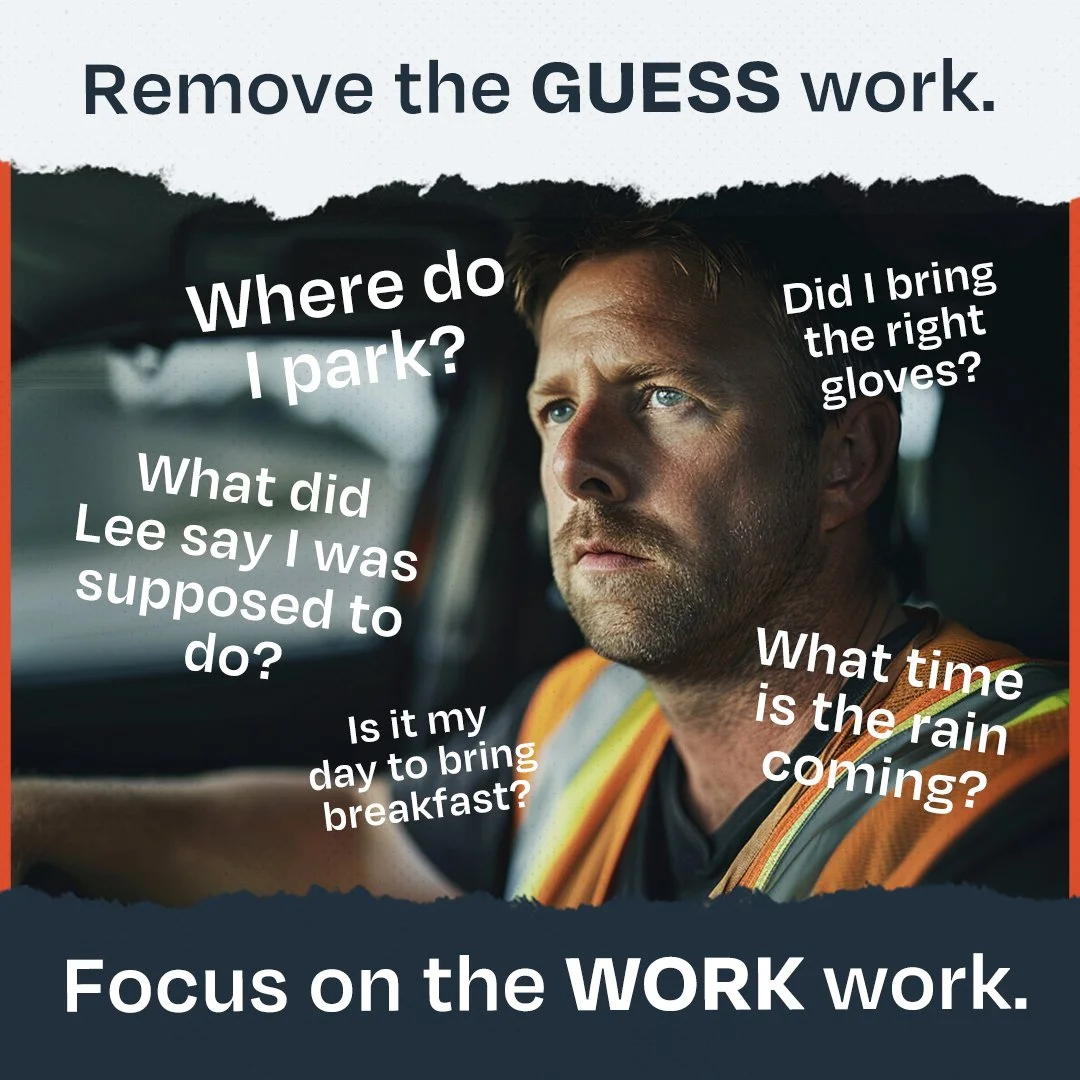
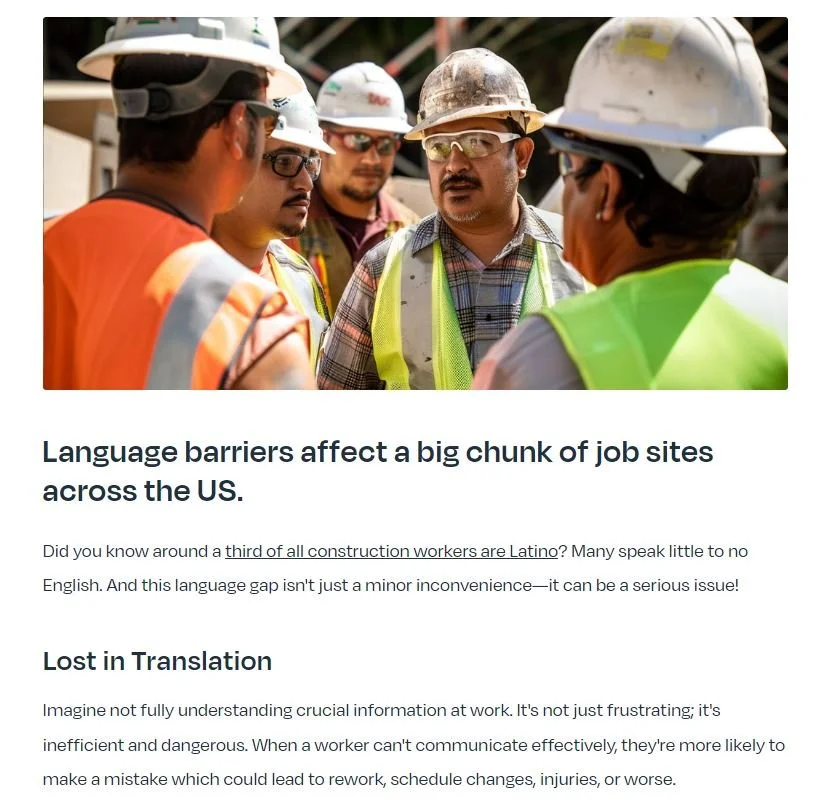
On job sites across the country, when a morning huddle happens to relay safety information, assignments, and updates, there’s a significant portion of the crew often doesn't speak English as their first language (usually a third of all crews). So after the official huddle ends, a secondary huddle typically forms. Spanish-speaking crew members translate everything that was just said for all those who missed it. Two meetings. Double the time. And a gap where critical safety information could get lost in translation.
That was the story. Not the feature. Not the technology. The human moment the technology was trying to prevent.
With approval from the customer success team and CEO, I threw out the original brief and we rebuilt the entire campaign around that image: the secondary huddle, the extra time, the quiet workaround that frontline workers had developed just to stay informed and safe. The auto-translation feature became the answer to a problem with a face on it.
That moment became the philosophical cornerstone of the entire brand refresh. We stopped talking about what MindForge does and started talking about who it's for.

The Work
Website Refresh
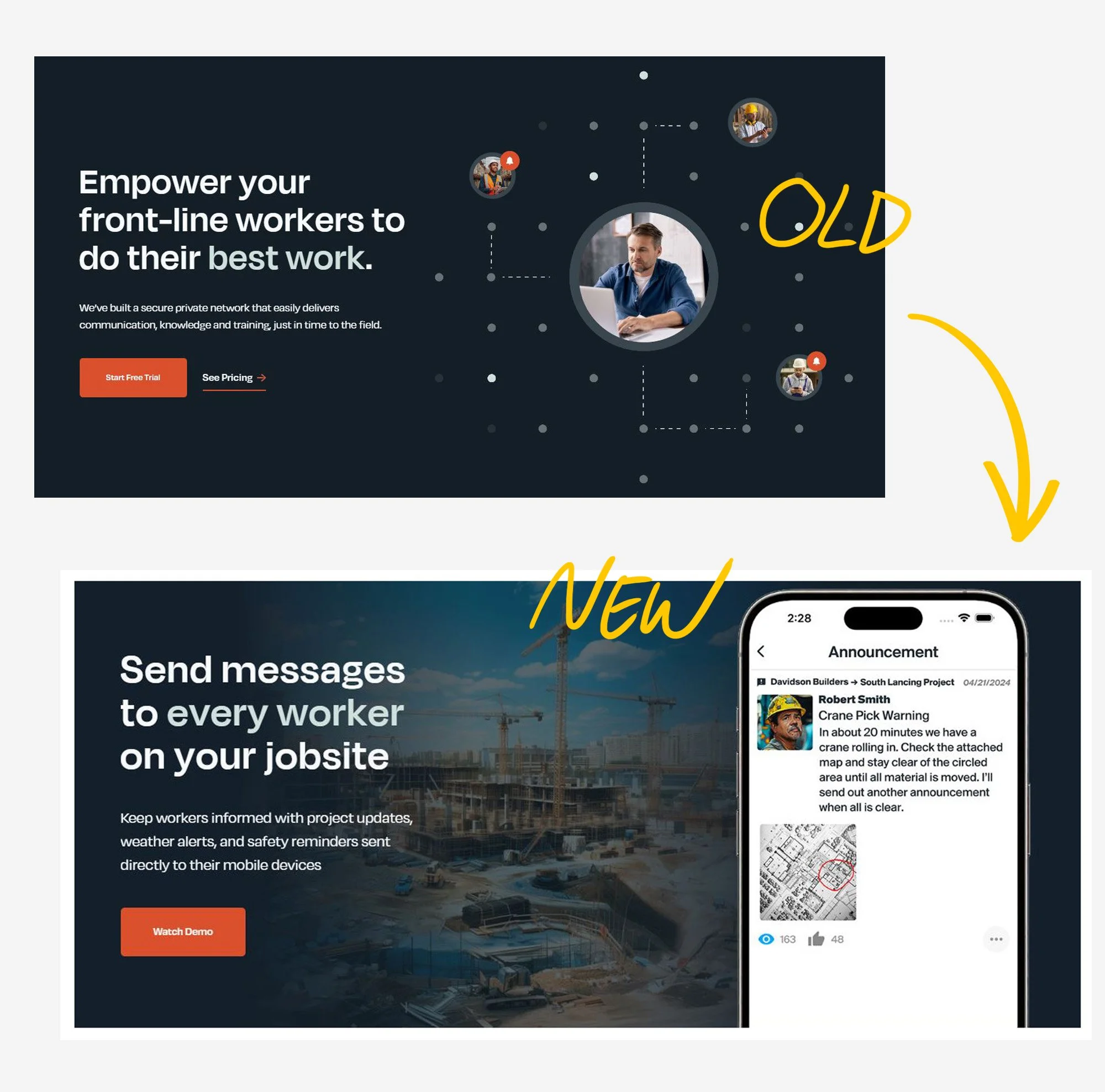
The site had been built around product features and enterprise credibility signals. For years, updating it had been deprioritized as too time consuming. I felt strongly that the brand couldn't move forward without it, so I took it upon myself to start mocking up pages, rewriting copy, and presenting the work to leadership until the project got traction.
One of the most persistent problems with the existing site was that the app itself was practically invisible. Visitors saw abstract icons and generic stock photos, but never the product. I stripped all of it out and replaced it with screenshots of the app in real use.
The catch was that those screenshots didn't exist. I had to build them from scratch.
Drawing on use-cases I'd absorbed through customer success conversations and testimonial video editing, I constructed realistic app scenarios with fictional users (fake reports, fake emergency alerts, fake crew communications) each one designed to show a specific, real-world way a construction team might use our platform. Every detail was considered. Every scenario was grounded in something a real customer had actually done.
Once approved, I worked alongside our outside design house to implement the changes, acting as the creative and strategic bridge between the c-suite's vision and the vendor's execution. The result drove measurable increases in organic sign-ups and demo engagement, and strengthened positioning with enterprise buyers.
Those screenshots are still the centerpiece of the MindForge website today.

Video Content
We produced a series of marketing videos designed to show MindForge in context; not as software on a screen but as a tool in the hands of real people doing real work. The tone was warm, grounded, and direct.
Not everything we tried worked as intended. I experimented with an illustrated animation style that leaned into my background as an illustrator, bringing real-world use cases to life through original character animation rather than stock footage. The response internally was mixed, and the videos didn't outperform our more straightforward productions. But the experimentation informed what came next. We learned that this audience responded to clarity and authenticity over stylization (a finding that shaped every content decision that followed).
The videos that landed best were the ones that felt the most real: customer testimonials and simple vlogs recorded by our CEO. Unsurprisingly, that turned out to be the same lesson we kept learning everywhere else.
The Auto-Translation Blog Post
The secondary huddle story became one of our most resonant pieces of content. By leading with the human moment rather than the feature announcement, we gave readers something to connect with before we asked them to care about the product. The piece was later repurposed across email campaigns and sales conversations as a way to open discussions with prospective enterprise clients.
Brand Voice Guidelines
One of the most lasting outcomes of the refresh was a set of brand voice guidelines adopted across all external channels. These gave our outsourced writers, marketing partners, and internal team a shared framework for how MindForge sounds (and more importantly, how it doesn't). The guidelines ensured that the human, grounded tone we established in the refresh didn't drift as the team and content volume grew.
Trade Show and Marketing Materials
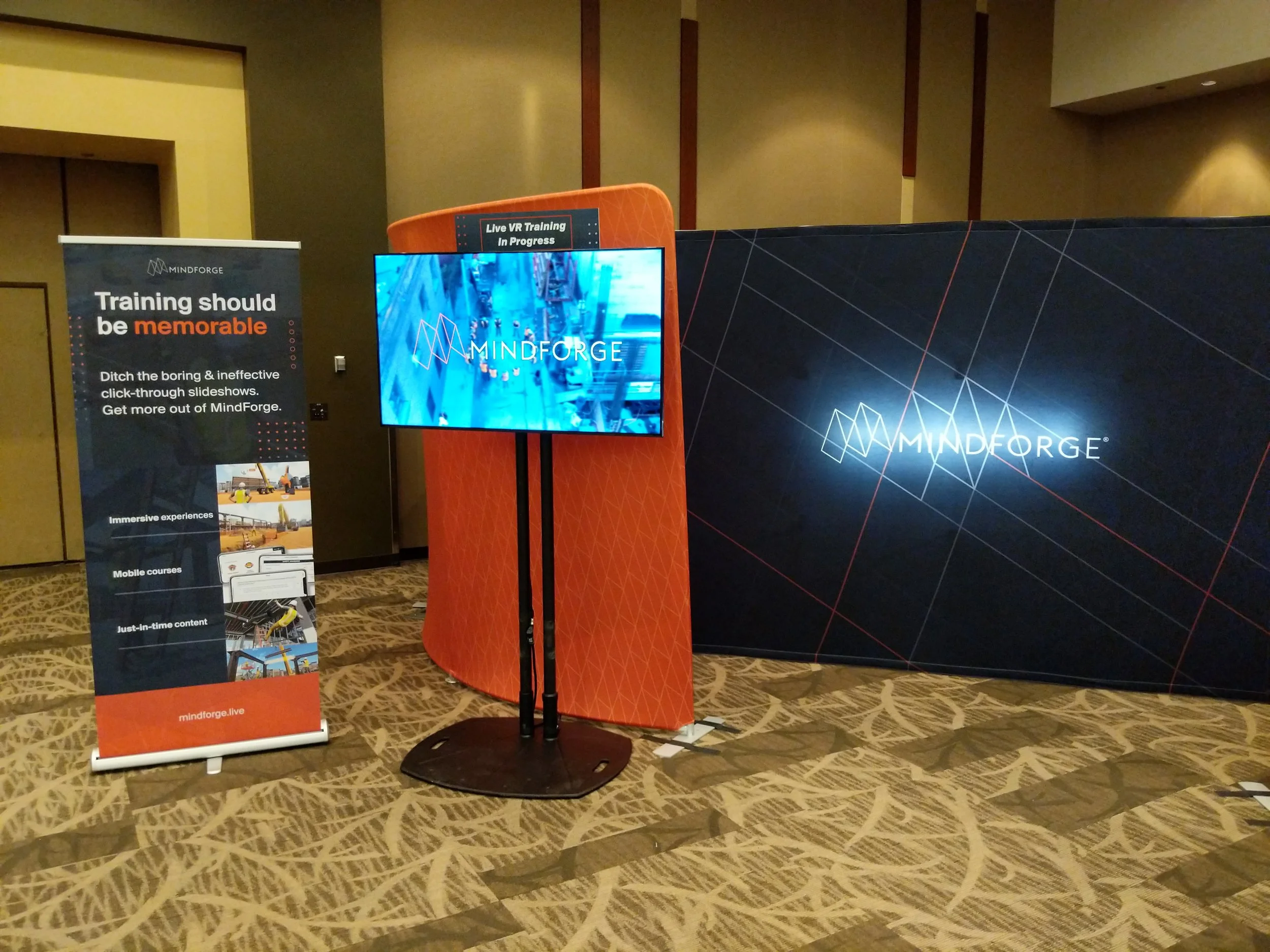
The refreshed brand extended to physical touchpoints: trade show signage, promotional materials, and event collateral; all designed to carry the same warmth and clarity as the digital presence.
One unexpected highlight: a small enamel pin featuring our cartoon mascot Safety Sam. What started as a simple giveaway became one of our most effective brand moments of the show. Attendees who received one wore them immediately, and other attendees tracked down our booth specifically because they spotted the pin and wanted one. One person told us they liked it because it "looked like someone they knew."
That's the whole thesis in a single comment. The best brand work doesn't feel like marketing. It feels like recognition.


The Outcome
The site refresh drove measurable increases in organic sign-ups and demo engagement. The repositioned messaging strengthened MindForge's conversations with enterprise buyers; shifting the brand from a feature list to a mission statement. The auto-translation campaign became one of our most effective pieces of content, used not just as marketing but as a sales tool in direct client conversations.
More broadly, the brand voice guidelines created a foundation that outlasted any individual campaign, giving the team a shared language for how to talk about the work that continues to be used today.
The brand infrastructure we built (the voice guidelines, the visual standards, the content approach) outlasted the team that created it. The work had staying power because it was built on something real.
What I Learned
MindForge never became the commercial success we hoped it would be. The company faced significant headwinds getting revenue off the ground, and I was eventually part of a layoff as the team contracted.
But the work taught me something I carry into every project now. The most compelling story is almost never the one in the brief. It's the one you find when you go looking - when you talk to the people closest to the customer, when you ask what problem actually feels like from the inside, when you resist the urge to lead with the product and instead lead with the person.
The secondary huddle wasn't in any product document. Nobody put it in a brief. I found it by being curious. And that curiosity produced the best work I did in seven years at that company.
That's the instinct I bring to every brand I work with.
Working within a structure that didn't always make it easy to act on good ideas taught me something too: that creative leadership is as much about persistence and persuasion as it is about vision.